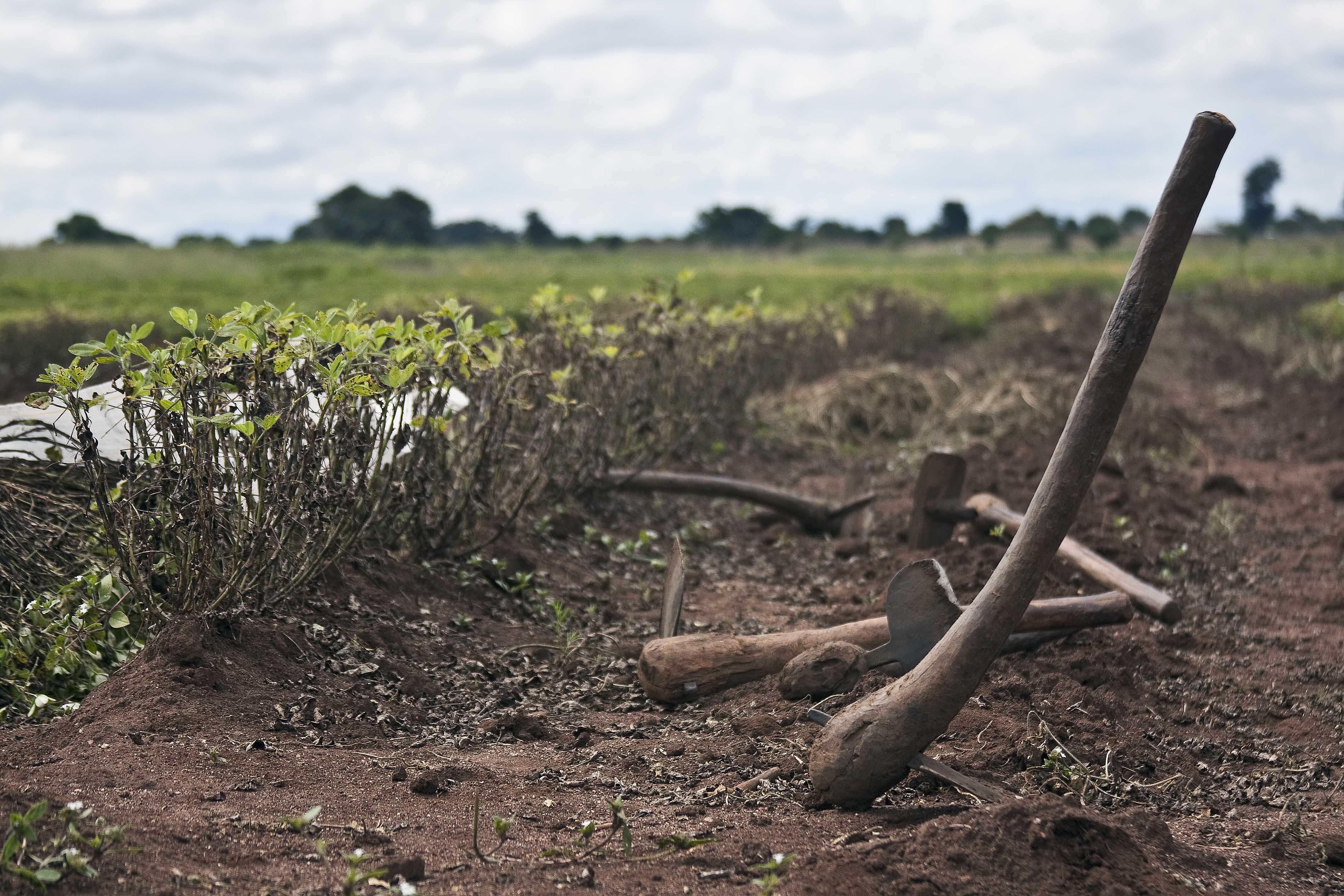
Climate change has been a popular topic in the news in recent years, from the Paris Agreement to young activists. However, climate change has had a massive impact on South Africa. Droughts, floods, and storms, along with economic instability, have all contributed to growing numbers of people in South Africa who face a food crisis. During a food crisis, households are able to meet basic food needs but only after selling essentials, such as livestock (Anyadike). A famine, which is more serious than a food crisis, is “when acute malnutrition rates exceed 30%, more than two people per 10,000 die per day, and people are unable to obtain food and basic necessities”, according to the United Nations (Gladstone). Currently, conditions in Africa aren’t improving. Every dry season, droughts are getting worse due to global warming as the government struggles to improve the living conditions of the impoverished population.
Droughts are a major factor that contributes to food shortages and famine in South Africa. Temperature changes in South Africa are projected to be higher than average global temperatures, and with climate change, droughts will only get worse each year (Shephard). Furthermore, areas in South Africa are still recovering from droughts in 2017 and 2018, with the number of malnourished children expected to rise (Anyadike). Along with droughts, flooding and storms continue to destroy crops and villages, making the development of emergency food services even more important (Roelf). If improvements aren’t made to the protection of crops or the availability of food services, the 45 million people across South Africa being affected by food shortages may be pushed into a famine (Roelf).
Recently, the U.S. Agency for International Development has announced that it would provide $8 million to combat the swarms of locusts, despite some U.N. officials saying that they need $76 million to address the swarms and possibly more if actions aren’t taken quickly (Gramer). Mark Green, USAID’s administrator, has stated that the goal of the U.S., as their partners and allies, is to have the countries take the lead and have the U.S. support them and work with them to combat food shortages (Gramer). With most problems stemming from climate change, Robson Mutandi, the IFAD director for the South Africa hub has stated that “climate change is an existential emergency which must be tackled with the utmost urgency” (Roelf).
Works Cited
Anyadike, Obi. “Drought in Africa Leaves 45 Million in Need across 14 Countries.” The New Humanitarian, 10 June 2019, www.thenewhumanitarian.org/analysis/2019/06/10/drought-africa-2019-45-million-in-need.
"Climate change: A model to forecast the spread of malaria." Global Warming Focus, 2 Mar. 2020, p. 6. Gale In Context: Global Issues, https://link.gale.com/apps/doc/A615827288/GIC?u=los42754&sid=GIC&xid=56bdf448. Accessed 12 Mar. 2020.
Gladstone, Rick. “U.N. Aid Chief Warns of Looming 'Horror' as Somalia Again Faces Famine.” The New York Times, The New York Times, 5 June 2019, www.nytimes.com/2019/06/05/world/africa/africa-famine-united-nations-somalia.html.
Gramer, Robbie. “Top U.S. Aid Chief Warns of Locust Devastation in East Africa.” Foreign Policy, Foreign Policy, 26 Feb. 2020, foreignpolicy.com/2020/02/26/usaid-mark-green-locust-swarms-east-africa/ .
Roelf, Wendell. “Record 45 Million People in Southern Africa Facing Food Crisis: U.N. Agencies.” Reuters, Thomson Reuters, 31 Oct. 2019, www.reuters.com/article/us-africa-hunger/record-45-million-people-in-southern-africa-facing-food-crisis-un-agencies-idUSKBN1XA25G.
Shepard, Dan. “Global Warming: Severe Consequences for Africa | Africa Renewal.” United Nations, United Nations, Mar. 2019, www.un.org/africarenewal/magazine/december-2018-march-2019/global-warming-severe-consequences-africa.
Vigne, Randolph, et al. “South Africa.” Encyclopædia Britannica, Encyclopædia Britannica, Inc., 12 Apr. 2020, www.britannica.com/place/South-Africa.

This comment has been removed by the author.
ReplyDeleteMy favorite part of the article was actually in the introduction hen you defined the different terms surrounding your topic. This made it much easier for me to understand the scope and severity of the problem and really helped improve my understanding. My main takeaway from the article was that there are some problems that simply cannot be solved on a small level. At the end of the day, the true culprit behind the food problems in Africa is climate change, and that is something we need to tackle as a global community, not just as a group working with African leaders. Speaking of the local African leaders, do you know how they plan to combat this problem and is any plans or ideas have been proposed outside of waiting on the UN and US for help?
ReplyDeleteThis comment has been removed by the author.
ReplyDeleteI liked how you were able to connect your body paragraphs very well; the interconnection between droughts and economic instability was very clear to me. After reading your article, I was able to understand that the effects of climate change has caused major food shortages in South Africa, and it is an issue that must be tackled as a global community, rather than as independent support countries. I wonder how South Africa will be able to use the money planned to be provided by the US Agency for International Development, despite only being $8 million.
ReplyDelete