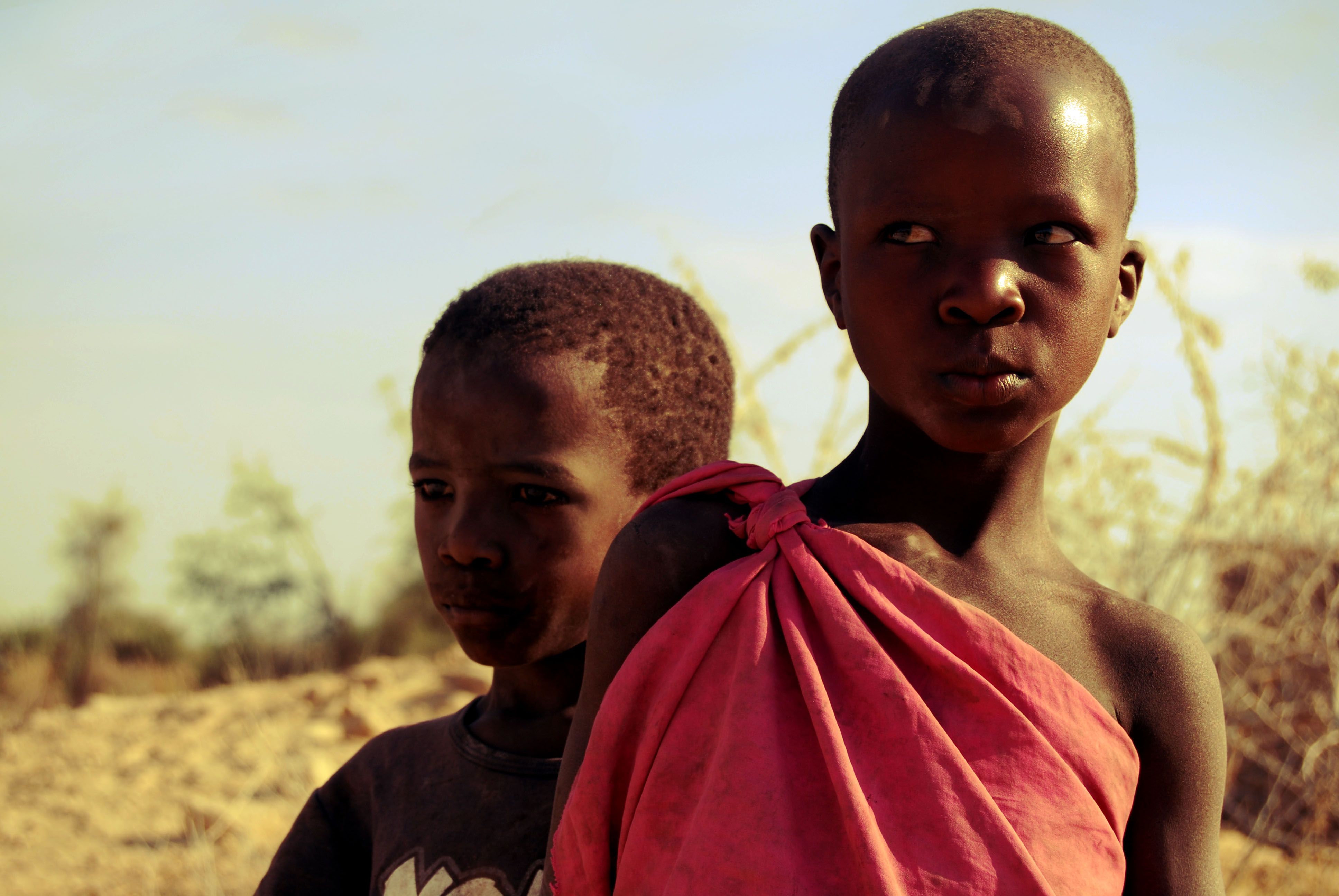
Kenya’s coast is known for several things: spotless white sand, swaying palm trees, vibrant, blue water. Each year, these beautiful attractions bring millions of international visitors to Kenya. But among the idyllic background of these sites is one more thing—child prostitution.
Along the Kenyan coast, where the issue is most severe, an estimated third of all girls from ages 12–18 have engaged in sex work (“An In-Depth Look”). With over twenty percent of the population living in extreme poverty, Kenyan society has normalized child prostitution as a means to make ends meet (Hamel). But paying these bills often comes at the cost of many of these children’s futures, creating a cycle that often proves difficult to break free of.
The problem boils down to money. And with a booming sex tourism industry, prostitution has become the norm—so much so that families send their children to be prostitutes (Muendo). “It’s easy to get men,” one girl said. “It’s not where I wanted my life to be. But when there is no option, you do it and slowly it becomes a habit” (“An In-Depth Look”). The issue is further exacerbated as it ties into several other issues that plague Kenya. A study by Avert, an international AIDS and HIV organization, found that with millions dying from HIV and AIDS, families lose their main source of income, forcing children to find alternate sources (“The Impact of HIV”). Aside from this, many minors have also reported being pulled into drugs or alcohol as a result of prostitution or vice versa, compounding the effects of each individual issue (Wasike).
Ironically, however, this solution to financial problems often ends up becoming cyclical in nature, pulling future generations in as well. The first way this happens is by the fact that the practice is standardized in society. With parents sending their children to be prostitutes, many grow up to follow the same path for their children, furthering the issue (Muendo). Another key way that this happens is resulting from HIV and AIDS. As a result of the disease, many students are pulled out of school, decreasing their knowledge about disease prevention and safe sex (“The Impact of HIV”). Furthermore, some go so far as to consciously forgo condoms because clients will pay more, opting for less effective and more toxic post-exposure treatments (Murenga). One girl, for instance, was born HIV-negative, but when her parents died from an AIDS-related illness, she was pushed to sex work, where she was infected. “I dropped out of school so there is nothing else,” she said. Despite her aunt trying to get her help, she was trapped in prostitution, as she perceived it as the only way to survive. “I am not looking for any help,” she said (Wasike).
One of the key reasons that the issue persists is the lack of clear legislation and effective regulation. For the sex workers themselves, a beaurocratic process and much negative stigma makes it difficult to get help in times of crisis (Murenga). On the regulatory end, the issue is difficult to detect because many of the perpetrators are international tourists in private villas that are not monitored. Even when the child prostitution is identified, however, the government is reluctant to crack down on these international visitors, as tourism contributes ten percent to the country’s GDP, according to Lilian Mendo, a journalist in Kenya. New regulations, of course, will not always be followed, but they are the first step to mitigating the issue; long-term change will only come by breaking down societal practices and addressing underlying issues of poverty.
Works Cited
Hamel, Kristofer, Baldwin Tong, and Martin Hofer. “Poverty in Africa is Now Falling—But Not Fast Enough.” Brookings, The Brookings Institution, 28 Mar. 2019, www.brookings.edu/blog/future-development/2019/03/28/poverty-in-africa-is-now-falling-but-not-fast-enough/. Accessed 14 Apr. 2020.
“The Impact of HIV and AIDS on Africa.” Sexually Transmitted Diseases, edited by Roman Espejo, Greenhaven Press, 2011. Opposing Viewpoints. Gale In Context: Opposing Viewpoints, link.gale.com/apps/doc/EJ3010787210/OVIC?u=los42754&sid=OVIC&xid=6b9e0219. Accessed 13 Mar. 2020. Originally published as “The Impact of HIV & AIDS on Africa,” www.avert.org/aids-impact-africa.htm, 2010.
“An In-Depth Look into Child Prostitution in Kenya.” CNBC Africa, 15 Jun. 2018, www.cnbcafrica.com/news/east-africa/2018/06/15/an-in-depth-look-into-child-prostitution-in-kenya/. Accessed 11 Mar. 2020.
Muendo, Lilian. “Parents sell children as Kenya’s sex tourism normalizes exploitation.” Global Sister’s Report, National Catholic Reporter, 1 Mar. 2018, www.globalsistersreport.org/news/ministry/parents-sell-children-kenyas-sex-tourism-normalizes-exploitation-52246. Accessed 11 Mar. 2020.
Murenga, Maurice and Corin Faife. “Kenyan Sex Workers Using HIV Drugs Instead of Condoms.” The Guardian, 7 May 2014, www.theguardian.com/global-development/poverty-matters/2014/may/07/kenya-sex-workers-hiv-aids-drugs-condoms. Accessed 13 Mar. 2020.
Wasike, Andrew. “Kenyan Child Prostitute: ‘I Started Prostitution when I Started Drinking.’” Deutsche Welle, 25 Nov. 2018, www.dw.com/en/kenyan-child-prostitute-i-started-prostitution-when-i-started-drinking/a-46441837. Accessed 23 Mar. 2020.

I really liked how you connected it to the root cause of the issue, not just the surface-level causes. It's sad how cyclical poverty is perpetuated by the "solution" to the problem. Has the government addressed the issue?
ReplyDeleteYou're introduction/hook is very strong and definitely does a good job of grasping the readers attention. The mixed usage of paraphrasing and direct quotes made the article even more interesting. How long does this problem go back? Has it recently gotten worse or has it been occurring for a while?
ReplyDeleteI like how you discussed the poverty cycle and how this downward spiral keeps continuing without intervention and connecting it back to the vast HIV population in Africa. It's interesting how tourism is the factor that keeps spinning this cycle—that and lack of regulation. I never thought that would be the connection. What regulations need to/can be made to protect minors from poverty?
ReplyDeleteThis was really interesting to read about, my favorite part was learning the background of the cause and why the issue is being perpetuated. You gave a clear line of reasoning and compelling evidence, especially with the specific example of the girl who had to drop out of school. As for further solutions, what is a way to regulate the actions of tourists?
ReplyDeleteI like your introduction, and how it eased the readers like me into your main topic. I know for a fact that you are very passionate about children conditions because I overheard you practicing your speech about children's education in China in the library. And your solution to the problem is very clear and achievable for the audience. Bravo.
ReplyDeleteYour article was really intriguing and well written. My favorite part was the introduction, since it was engaging and seamlessly fed into your topic. My main takeaway was that some girls are forced into sex labor because of their lack of other options, and need for more money. Why do you think the government is not being active regarding solving this issue since it is impacting their population?
ReplyDelete